By Joslyn DelSignore / Jambar Contributor
As seasons change, it’s common for people to feel sad or low-spirited. Many who have this feeling may be experiencing seasonal affective disorder, more commonly known as seasonal depression.
Jake Protivnak, chair and professor of psychological sciences and counseling at Youngstown State University, said seasonal depression is a form of major depressive disorder that follows a seasonal pattern.
Characteristics could include feeling depressed, worthless or hopeless. Some might also experience changes in appetite or interests, lack of energy and difficulty sleeping. Protivnak said in terms of seasonal depression, the symptoms are mainly related to a change in season.
“It’s at a certain time of year now that someone’s really experiencing these types of symptoms, and it’s not better explained by some other issue or stressor in their life, that those depressive symptoms are clearly tied to a season,” Protivnak said.
According to Appalachian State University, approximately 25% of college students across the U.S. experience seasonal affective disorder. According to Student Counseling Services’ website at YSU, approximately 6.8% of the U.S. population experiences seasonal affective disorder.
While seasonal depression is most common in the winter, Francine Packard, director of Student Counseling Services, said it can also occur in spring or summer. She said the service saw many cases of seasonal depression this summer.
Packard said the triggers of seasonal depression can look different for everyone.
“Everybody’s got different experiences, and those life experiences can sometimes get reactivated by present-day people, places and things that people come in contact with,” Packard said. “The added stress of maybe academics, athletics, working, finances on college campuses, those are stressors that can trigger or activate [seasonal depression.]”
Even people who’ve never experienced seasonal depression before may find themselves encountering it now, Protivnak said. He noted college students are more likely to experience seasonal depression for the first time in their late teens and early 20s.
“They might not have experienced that as a high school student or a middle school student, but with seasonal affective disorder and some other disorders, this kind of 18-22 college-age time period is when some of these disorders will present themselves,” he said.
Protivnak said factors such as academic stress and lack of sleep could be triggers of seasonal depression, as well as students feeling lonely or without a sense of belonging. Protivnak said he encourages students to get involved on campus to keep them from isolating themselves.
“I encourage students to look for opportunities to be socially connected, avoid social isolation,” Protivnak said. “Try to find a community that you can belong to, a group of friends, connect with your faculty [and] your academic advisers.”
The weather also plays a major role in seasonal depression, Protivnak said, especially a lack of sunshine. He said about 50% of days in the Youngstown area are cloudy or overcast, which becomes a large factor for seasonal affective disorder in December and January.
Jennifer Lensel, lecturer in psychological sciences and counseling, said having low vitamin D has similar symptoms as anxiety and depression. She recommends regular checkups with primary care physicians to make sure the body is healthy, as well as the mind.
“If somebody is noticing a pattern in their life where they are not as interested, they’re feeling more irritable, even if they’re just questioning seeking help, they don’t have to qualify for a diagnosis to get help,” Lensel said.
Lensel said when the seasons change, especially in the winter, it’s important to know the difference between relaxation and isolation.
“It’s natural for us in the winter to slow down, to kind of hibernate … but it’s not natural for us to isolate, to lose interest and all of that,” Lensel said.
Protivnak said being physically active can help or prevent seasonal depression. He recommends going for a walk outside or visiting the Andrews Student Recreation and Wellness Center on campus. Prioritizing healthy sleep habits, Protivnak said, can help as well.
Packard suggests practicing mindfulness, slowing down and taking in moments, even if they seem small.
“It’s a five minute investment in yourself to not have to worry about anything else but enjoying what’s right in front of me and then go about your day,” Packard said.
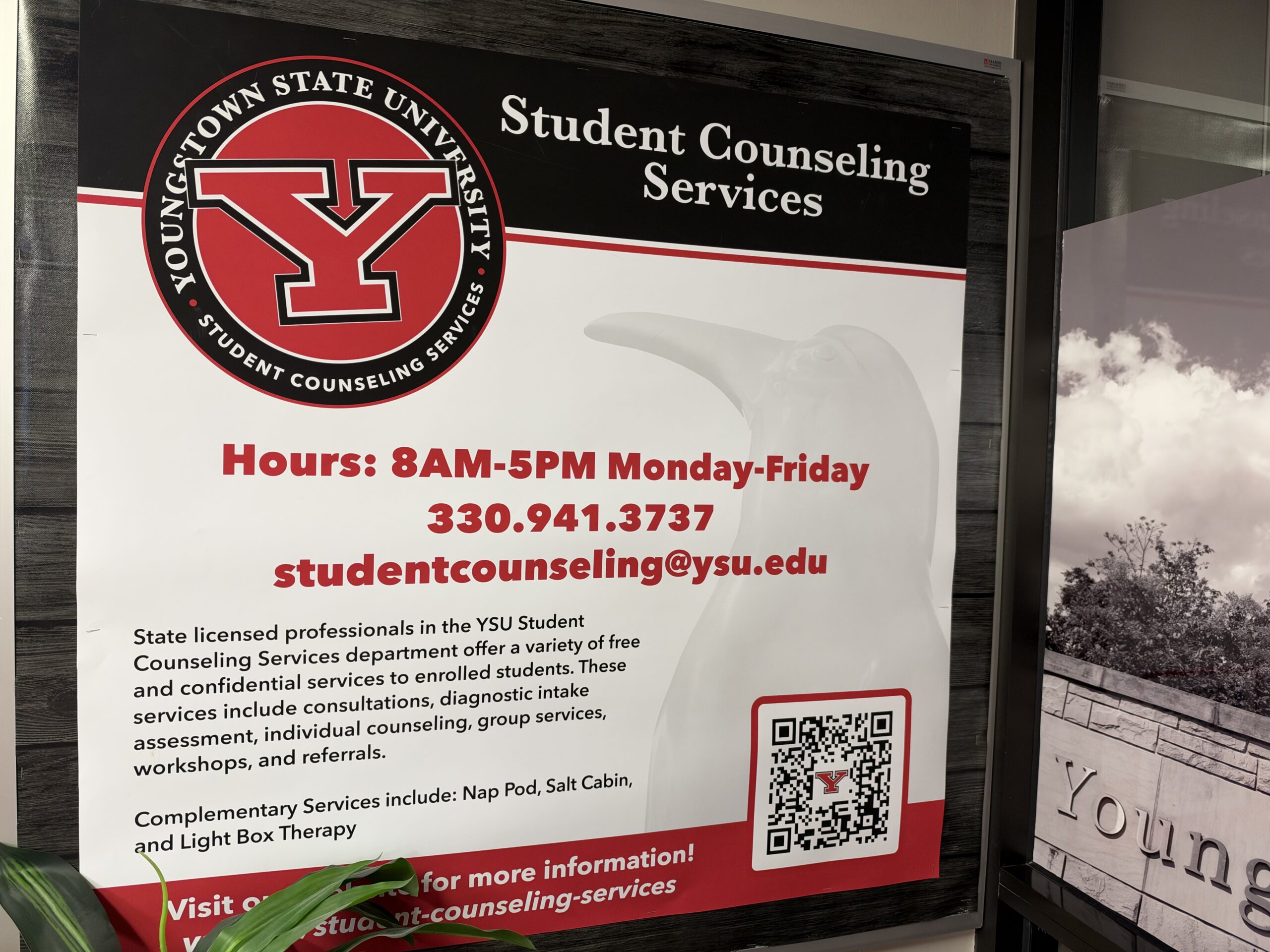
Student Counseling Services also offers many complimentary resources that students can use on campus.
Light box therapy uses a device that shines a light resembling natural outdoor lighting, which is intended to prevent seasonal affective disorder. It can also decrease feelings of sadness and anxiety.
Students can reserve a time slot of 20-30 minutes in the light box therapy room. Student Counseling Services also offers resources such as nap pods, a salt cabin and a sensory room.
Protivnak said he recommends students use on-campus resources to take care of their mental health.
“If you’re feeling down, feeling depressed, it’s not your fault. You’re not weak, and you’re not alone. We have resources here on campus that can support you,” Protivnak said.
Packard said Student Counseling Services appointments are booked for the next two to three weeks, but students can still make appointments year-round.
She said students can make appointments by emailing studentcounseling@ysu.edu, calling 330-941-3737 or visiting the department on the third floor of DeBartolo Hall in Room 319.