

By Benjamin Davis / The Jambar
In the waning days of 1972, NASA conducted its last crewed mission to the moon. Now over 50 years later, the organization is once again sending humans back to Earth’s natural satellite.
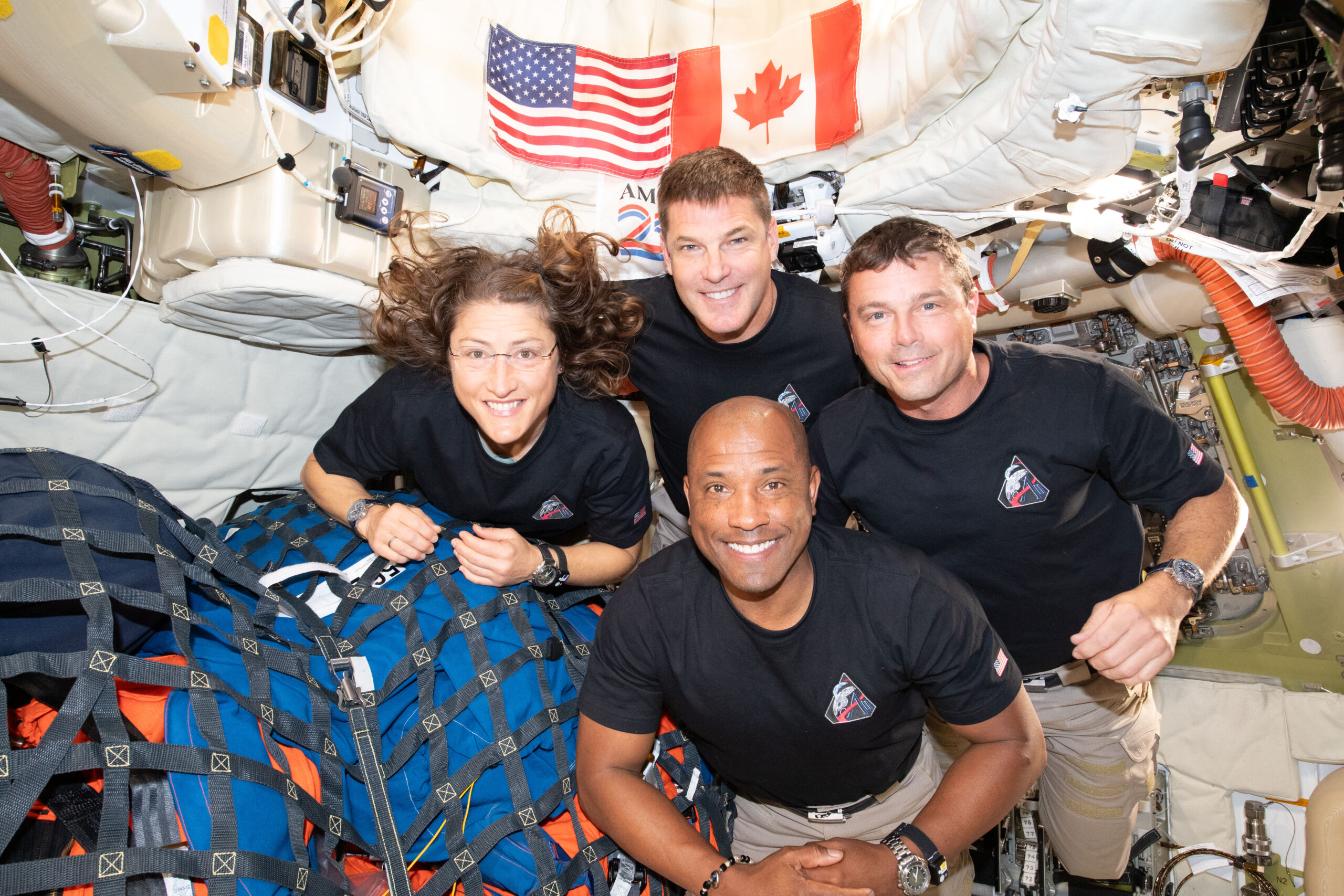
Launched on April 1, the Artemis II mission sent four astronauts, three from NASA and one from the Canadian Space Agency, on a trip to the moon and back. According to Patrick Durrell, astronomy professor at Youngstown State University, Artemis II will be flying around the moon rather than landing on it directly.
“The Artemis II mission is the first mission to send people around the moon. The last time this was done was on Apollo 17 back in 1972,” Durrell said. “They’re doing the trip to the moon, going around the moon once and then coming back on a free-return trajectory.”
The mission debuts Orion, NASA’s new space capsule and module. Durrell said Artemis II serves as the first crewed test for Orion.
“[It’s] the new capsule/module that’s going to be carrying the astronauts for the large part for any future lunar missions,” Durrell said. “This is the first crewed test of the Orion space capsule in both the Earth and the lunar environments, so it’s an important stepping stone towards eventually, you know, using a lander and landing back on the moon after so long.”
The main objective of Artemis II is to test the Orion capsule and the new technology that’s aboard it. Durrell said that a crewed mission is needed to ensure everything is in working order.
“With all the new technology, you got to make sure everything works and fix what needs to be fixed,” Durrell said. “People have not been back on the moon since, you know, 1972. It’s sort of like, ‘Well, we got to get reacquainted.’ New system, new equipment. Think of all the technology that has changed since 1972.”
Another objective of Artemis II is to study the far side of the moon and its craters. Durrell said that this can provide the scientific community with insights into how the early solar system was shaped.
“Everything in the solar system, billions of years ago, got bombarded by asteroids and comets, and that’s what leaves all these craters. Well, the Earth doesn’t have any record of many of those anymore because the Earth is, you know, changing all the time,” Durrell said. “The moon, however, still shows that record. So, by studying more about the moon, we get a leg up on … ‘What was cratering like in the early solar system?’”
An effect of Artemis II is the potential for young people in high school or college to become more interested in science, technology, engineering and mathematics. Durrell said the Apollo missions of the 1960s and ‘70s had a similar effect.
“There was a huge influx of people going into STEM-like careers because of Apollo,” Durrell said. “Because of the Apollo missions, and people getting excited about space and space travel in the late ‘60s, planetariums started springing up everywhere in the U.S., and we were no exception. Our planetarium opened in 1967.”
Durrell said students at YSU have shown interest in the Artemis II launch.
“I have students saying, ‘Are you watching the launch tonight?’” Durrell said. “They’re clearly interested in this and picking up on things.”
The astronauts of Artemis II are scheduled to return to Earth on April 10. The upcoming show schedule for Ward Beecher Planetarium can be found on its website for those interested.