
By Nicarlyle Hanchard / The Jambar
Heating issues are seasonal concerns for those who reside in residence halls at Youngstown State University. It also poses a concern for the various academic buildings around campus.
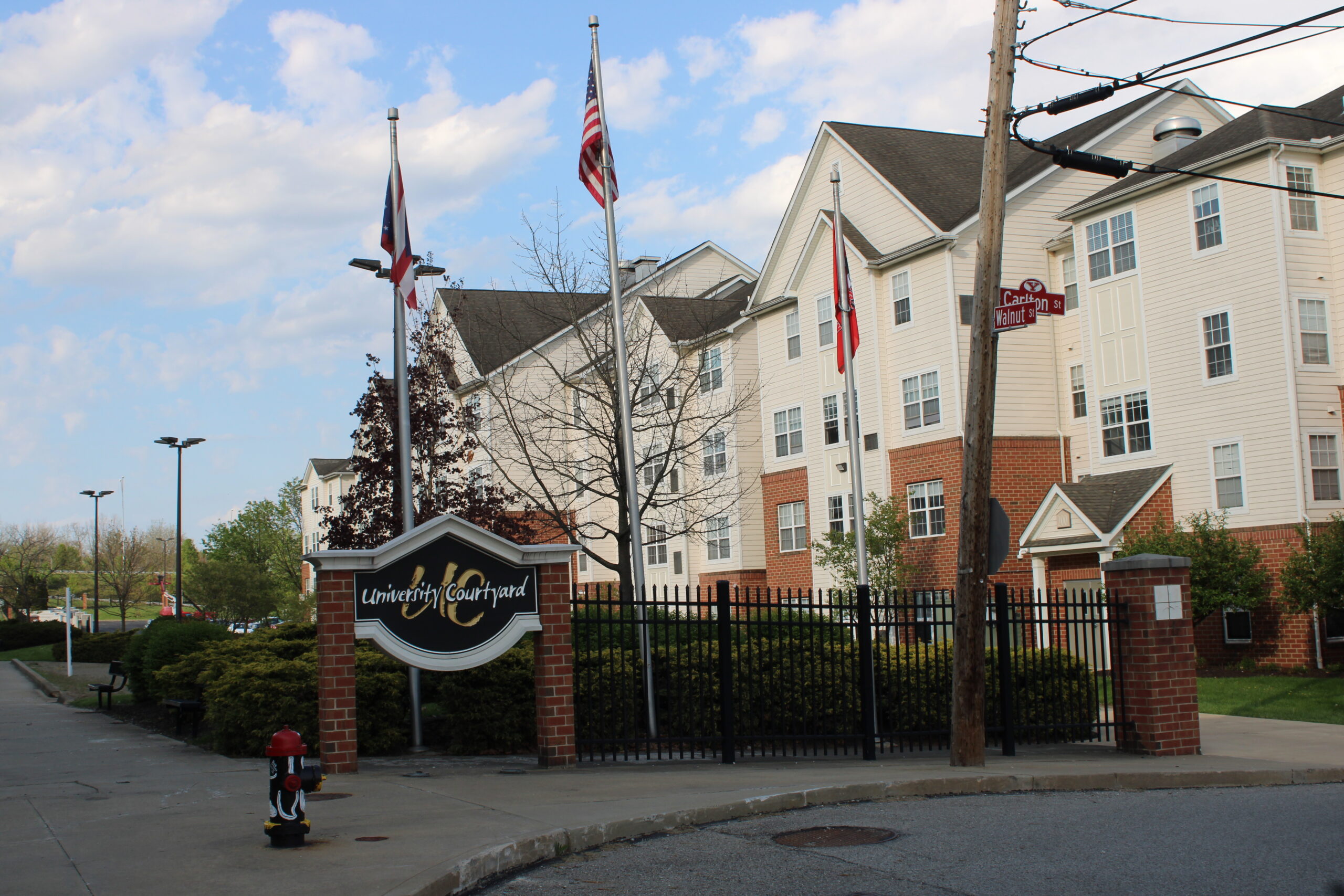
Toward the end of March, in the 200 building of the University Courtyard Apartments, residents identified the heating in the stairwell to be of specific concern. Madelynn Hanna, junior human resources major and resident of the Courtyards, said the heating issues in the stairwell have been ongoing since winter.
“Well, the heat was on during the winter, and this wasn’t just a few weeks ago. It was ongoing throughout the winter and at the start of spring,” Hanna said. “The stairwells were getting so hot that if you were to grab the handrails going up the steps that it would burn your hands.”
Hanna said though she understands the heat is needed in the winter, the temperatures were still high.
“Even during the winter when it was cold outside, people would open the windows in the stairwells and the issue would not be resolved. They were still hot,” Hanna said.
The university’s heating and cooling system is on a schedule set by the Facilities Maintenance and Support Services office, in accordance with state law. Olivia Cupp, director of Housing and Residence Life, said during the transition period — winter into spring — students often raise complaints about in-suite temperatures.
“As things start to consistently heat up outside, we start to get feedback from students that they’re becoming, you know, a little bit uncomfortable in their rooms,” Cupp said. “All of our residence hall rooms are individually climate controlled. What we mean by that is that they all have their own in-room HVAC unit that provides heating or cooling. They’re not a system that provides both heating and cooling at the same time.”
Though the heating and cooling system schedule may cause some discomfort for students, Cupp said it is done to account for the fluctuation of temperatures during the season change and provide maximum comfort.
Jesse Wallace, associate director of facilities maintenance, said that according to the American Society for Heating, Refrigerating, Air-Conditioning and Engineering standard and Ohio Administrative on Energy Efficiency, the interior design of public institutional spaces are supposed to be between 68 degrees to 72 degrees Fahrenheit for heating, while it is 75 degrees Fahrenheit for cooling. He said the facilities department attempts to keep the cooling at 72 degrees Fahrenheit during the summer.
Wallace also said generally, the cooling and heating system for the educational buildings on campus are on a schedule, but it also depends on the occupancy of the building.
“Talking about campus educational buildings, they are on a schedule and it depends upon what the occupancy of the building looks like. The idea is, if nobody is in the building, we will reset the designed temperature setpoints by about five degrees, just to save a little bit of energy — when nobody is in the building,” Wallace said. “Ideally, 30 minutes before the building starts up, when we’re expecting to see a high occupancy load, the building starts up and actually starts all the mechanical equipment to try and precool or preheat the space before anybody gets there.”
Housing and Residence Life has platforms through which students can file maintenance requests. Wallace said once the requests or complaints are submitted to the office, or sent to the facilities email, he sees them and takes an approach which prioritizes students’ comfort.
“I want them to know that their concerns are heard. They’re not falling on deaf ears. We’re trying to do everything we can to make sure that their comfort is made first priority. You know, at the end of the day, they’re our customer, and we need to do our best to make sure that the customer is satisfied,” Wallace said.